
Who is this for?
“What does ‘the right English class’ mean in Singapore?
In Singapore, English is the language of most meetings, emails, shops, schools, and daily interactions. So the right class is not only about a school name or a convenient location.
The right class should help you handle the situations that matter in real life. That may mean speaking more clearly at work, writing better emails, understanding your colleagues, or simply feeling more at ease when you talk to people every day.
Before you compare schools, think about these questions:
- What is your English level now?
- What level do you need next?
- What do you need English for in Singapore?
- Who do you speak to most often?
- What is going wrong now?
- How much time can you invest in learning English each week?
A class is only a good English class for you when it matches those answers.
What English level should you aim for in Singapore?
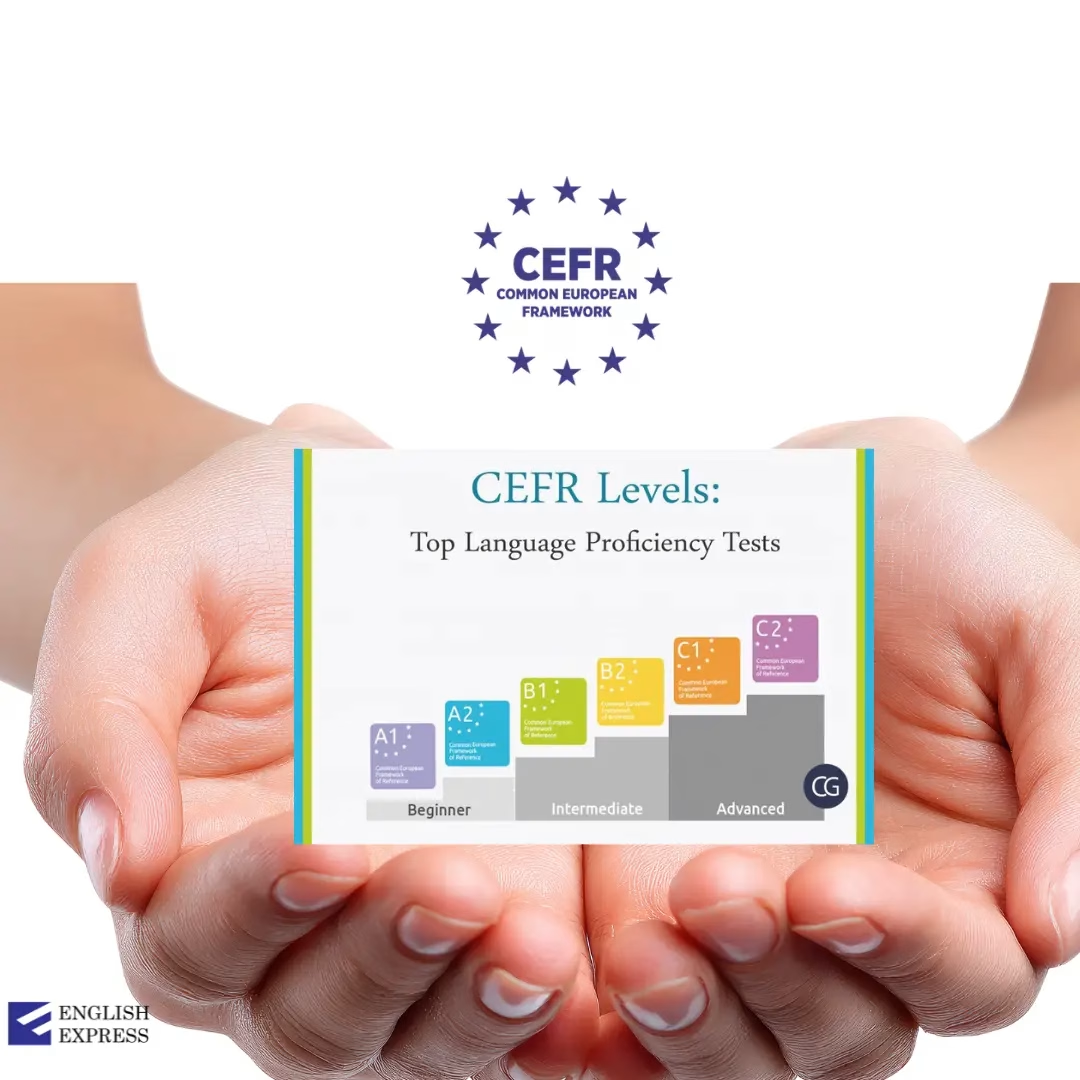
A useful way to think about your level is the CEFR scale. This is a simple level system from beginner A1 to advanced C2. You can read our guide to CEFR levels and study hours to learn more about what each level means.
The important point is not to chase the highest possible level right away. The better approach is to choose the next level that fits your goal.
For daily life in Singapore
If your English is still below B1, daily life in Singapore often feels harder. You may avoid longer conversations, feel nervous in groups, or struggle when people speak quickly.
At around B1, many adults start to feel comfortable enough for daily life. You can usually deal with common situations, join simple conversations, and make friends more easily in English.
That does not mean B1 is perfect, but it is a turning point.

For work in Singapore
Your target level for work depends a lot on who you speak to.
If you work mainly with Singaporean colleagues or customers, the bar is a little higher. People speak quickly, switch topics fast, and expect clearer English. In that case, B2 is a good minimum target, and you should aim to keep progressing towards C1 level.
If you work mainly with international colleagues who also use English as a second language, B2 is often enough to do your job well. You may still want to improve after that, but B2 can already make work much smoother.
As a rule of thumb, B2 is the level where many people stop being judged for obvious English problems. Below that, mistakes in grammar, clarity, or pronunciation are more likely to stand out.

For study goals
Your target level should match the kind of study programme you plan to apply for.
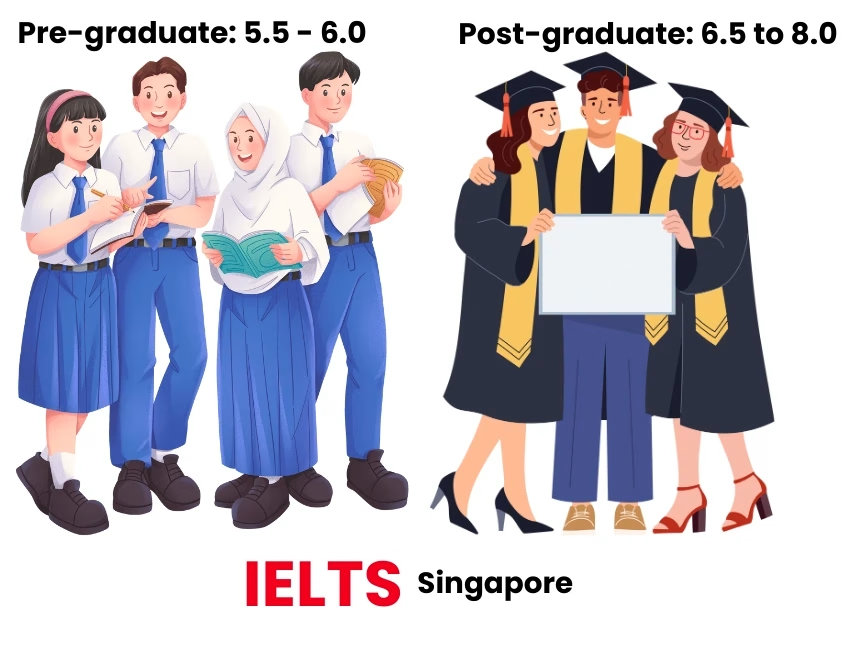
For a degree programme, B2 is often a sensible target. Universities such as NUS say that English is the medium of instruction at NUS and ask some applicants for minimum English test scores such as IELTS 6.5. At that level, you are more ready for reading, writing, class discussion, and independent study.
For a master’s programme, C1 is often the safer target. This is not a fixed rule for every university, but it is a useful guide. For example, some graduate programmes at the University of Melbourne ask for IELTS 7.0 IELTS also says that IELTS 7–8 corresponds to CEFR C1, while IELTS 5.5–6.5 is generally linked to B2.
Why aiming too high or too low can both disappoint you
You can always aim higher over time. But that does not mean your first target should be very high.
If your target is too high, you will feel discouraged and lose momentum. If your target is too low, you may study for months and still feel disappointed with the result.
A good target should stretch you, but still be possible.

What should an English language school ask before recommending a class?
A useful course recommendation should start with your situation. It should not start with a sales script or the courses that the school has available.
In real conversations, these are the kinds of questions that help most:
- Where are you from?
- How long have you been in Singapore?
- What kind of difficulties are you facing?
- Who are you speaking to at work?
- How will you use English outside of work?
These questions matter because they help us find out what the real problem is.
For example, two people can both ask for an English class after work. One may need basic grammar and confidence for daily life. Another may already manage daily life well, but still need help with meetings and emails.
That is why a good advisor should find the real problem first, then suggest a class.

Do you need general English or business English?
Many adults, when they approach us, tell us they want to study business English. That sounds logical, especially if your main problem is at work.
But a good advisor should ask one more question first: why?
If your grammar is weak, your pronunciation is unclear, or you still struggle to build clear sentences, business English may not be the best first step. In that case, you usually need stronger general English first.
When should general English come first
General English is often the better choice when your foundation is still weak. It helps you build the skills that support both work and daily life.
This usually makes sense if:
- you make many grammar mistakes
- people often ask you to repeat yourself
- you feel stuck when building basic sentences
- your writing is unclear even in simple messages
- you want more confidence in both work and everyday situations
If this sounds like you, general English is the best way to start. Read more about English for beginners in Singapore if you are still building your foundation.

When business English makes more sense
Business English makes more sense when your general level is already solid, but your work tasks need more attention.
This usually fits you better if your main issues are things like:
- leading or joining meetings
- writing clearer emails
- giving presentations
- handling phone calls
- using more natural workplace language
In that case, business English can be useful, because it will help you use English in specific work tasks.

How should your current level shape your path?
A good class should fit the path you need, not only your schedule. That path looks different for different people.
Here are a few simple examples:
- If you are at A2 and daily life in Singapore still feels tiring, aim for B1 first.
- If you are at A2 and need more confidence at work, B1 may be your first step, but B2 may need to be your next target after that.
- If you are at B1 and you already cope in daily life but still struggle at work, B2 may be the level that makes the biggest difference.
- If you are already at B2 and your goal is higher study or demanding professional communication, C1 may be the right next step.
This is why a good school should be able to say more than “join this class”. They should be able to explain your path clearly: where you are now, where you need to go, and what that will take.

How long does it take to move up a level?
There is no exact answer for everyone. Your progress depends on your starting point, your study habits, and how much effort you put in.
As a rough guide, many adults may need around six to nine months to move up one level.
For example, if you work full time and study twice a week in the evening, moving from A2 to B1 could take longer.
That estimate is not only about classroom hours. Most of our adult students have already learned English in school before. So part of the work is not learning from zero. It is reviewing, practising, and using English more actively.

Why effort matters more than seat time
It is easy to think progress is just about how many hours you sit in class. In reality, effort matters more than seat time.
You improve faster when you use the class well, practise between lessons, and connect what you learn to your real life. Teacher-guided practice helps a lot, but extra speaking, writing, review, and correction also matter.
Coming to class is important. But what you do outside the classroom will help you speed up. We will help you and encourage you, but ultimately you are the one who needs to do it!
Which class format fits your life?
The best class is one you can attend consistently. A perfect course on paper will not help much if you cannot keep up with it.
Keep these checks simple:
- If you only have evenings free, choose an evening class you can attend every week.
- If you are a complete beginner, choose a class with clear structure and enough support.
- If you need more speaking time and more feedback, look for a class with a small group size or private lessons.
- If your schedule changes often, check whether an online or flexible format will help you stay consistent.

In short: which route fits you best?
There is no one best English class for everyone in Singapore. The right route depends on your level, your goal, and how you use English in real life.
Use these simple rules of thumb to narrow your choice.
- If daily life in Singapore still feels hard and your level is below B1, start by raising your general English.
- If you only have time after work, choose an evening class you can attend consistently.
- If you are a complete beginner, choose a course that builds grammar, confidence, and speaking step by step.
- If your English is already solid but your problem is meetings, emails, or presentations, business English may fit better.
- If you need more speaking time in each lesson, compare small group classes with private lessons.
- If you need English for a degree or master’s programme, choose your target level first, then choose the class.
Which option is right for you?
A big school can suit you if you want a well-known brand, a wider range of programmes, or a more campus-style feel. That can work well for some learners.
English Express may suit you better if you want small groups (a maximum of 8 students per class), practical English, and a clear next step for your level. It can also suit you if you want lessons that connect closely to daily life and work, not only a course label.
But it is not the best fit for everyone. If you only want a very specific exam-prep route, a large provider setting, or a format that does not match what English Express offers, another school may be better for you.
There is no one best school for everyone. The main thing is to choose a school that understands your real problem and gives you a realistic next step.
FAQ
What English level do I need to live comfortably in Singapore?
For many adults, B1 is a useful first target. At that level, daily life often feels easier and conversations feel less stressful.
Should I study business English or general English first?
If your foundation is still weak, general English usually comes first. If your foundation is already solid and your problem is mainly work tasks, business English may make more sense.
How do I know if my level is below B1?
You may be below B1 if you still struggle with basic conversations, avoid speaking, or find it hard to deal with common daily situations in English. A level test can help you check more clearly – we offer one at the bottom of this page.
How long does it take to move from A2 to B1 or B2?
It depends on effort and consistency. As a rough guide, moving up one level may take around six to nine months for adult learners studying part-time.
Is an evening class enough if I work full time?
Yes, it can be enough if you attend consistently and do some practice outside class. The key is to choose a pace you can keep.
Should I choose group classes or private lessons?
Group classes can work well if the group is small and the level is right. Private lessons may suit you better if you want more personal attention, faster pacing, or more speaking time. But since you get a dedicated teacher, they are also more expensive.
What’s next?
If you feel this kind of class might suit you, you can take our free English level assessment at the bottom of this page. It only takes a few minutes and helps you see your level and which English Express course could fit you best.
At English Express and other Crystal Learning language schools, we see language, first of all, as a tool. It is a tool to understand courses you plan to take or to communicate with your colleagues well.
Many students spend money to take the WPLN test but don't do well because they are not at the correct level.
Over here, we spent years perfecting a test to determine your level. Instead of spending money to do it elsewhere, do it here first for free to quickly find out where you are at now.
Ready to start?
Take our English level test
Completely free